
RIRS Surgery in Faridabad
RIRS surgery in Faridabad is a minimally invasive procedure used for the selective treatment of kidney stones without making any incision on the outside of the body. Flexible ureteroscopy and laser techniques are employed by our urology specialists at ILSS Ashwani Hospital in order to access and break up the kidney stones.
What Is RIRS Surgery?
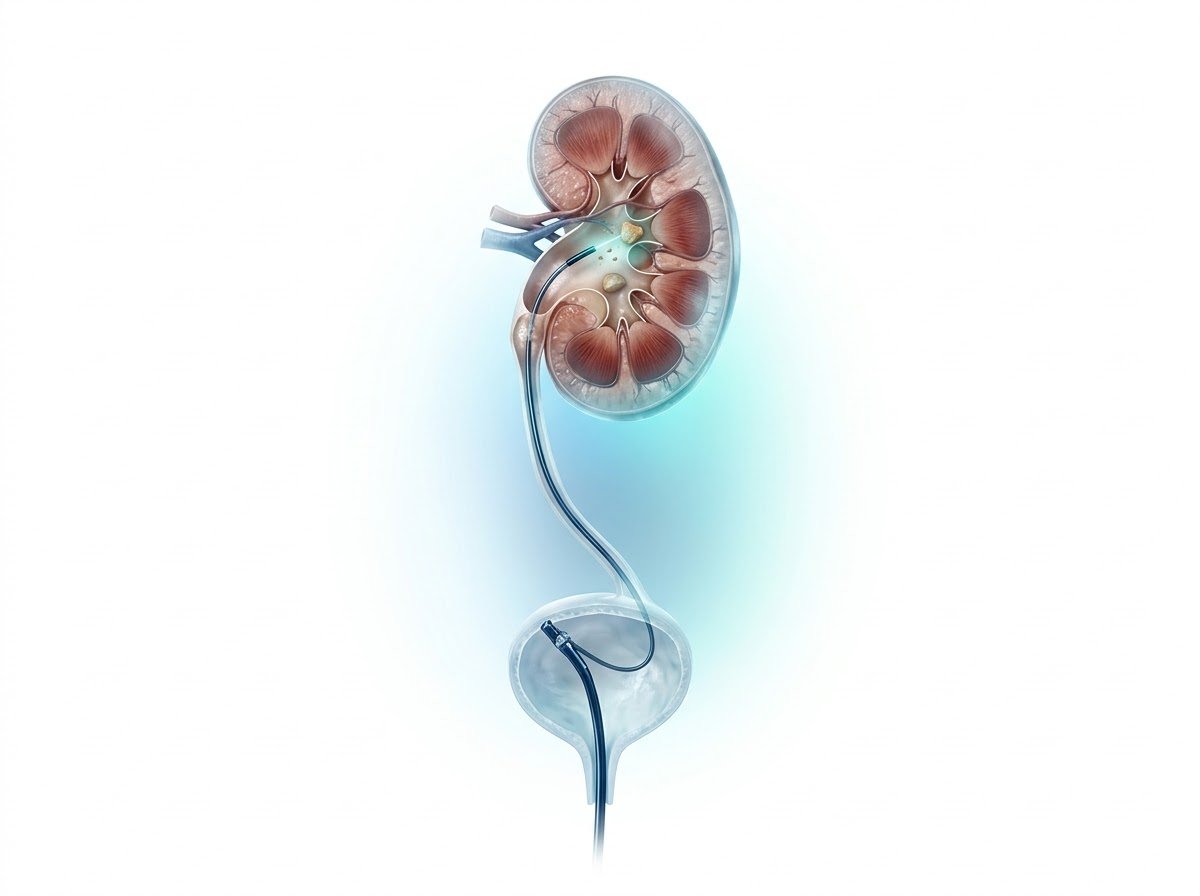
The abbreviation for RIRS is Retrograde Intrarenal Surgery. RIRS refers to minimally invasive endoscopy that aims at treating certain stones within the kidney.
How RIRS Works
In Retrograde Intrarenal Surgery, a very thin and flexible ureteroscope will be inserted via the urethra and bladder into the kidney by going through the ureter. Using laser energy, the stone will either be fragmented into pieces or even smaller particles.
The stone fragments will then be removed based on the particular clinical situation by means of specialized devices; otherwise, they will exit the body in the urine.
Unlike Open Kidney Stone Surgery
Unlike open kidney stone surgery, Retrograde Intrarenal Surgery does not involve any cut to access the kidney from outside.
- Access: Through the urethra, bladder and ureter — the natural urinary tract
- Stone Treatment: Laser energy fragments the stone into pieces or smaller particles
- Stone Clearance: Fragments are removed with specialized devices or exit in the urine
When Is RIRS Recommended?
RIRS can be suggested if your stone requires intervention and can be treated using a flexible ureteroscope. Your urologist will consider the following aspects.
Size and location of your stone
Whether it can be approached and treated successfully using RIRS.
Number of stones
Whether there are one or many stones which can be treated using the technique.
Anatomy of your kidney
The configuration of your urinary tract and the stone accessibility.
History of previous treatments
If any stone treatments previously failed or if you had recurring stones.
Symptoms
Pain and obstruction, among others.
Medical issues
Other health concerns that could affect the procedure chosen.
Imaging studies
The results from CT scans and other tests done on your stone.
How Is RIRS Surgery Performed?
The RIRS procedure is usually done under adequate anaesthesia. The procedure varies based on the stone type and the patient's condition.
Pre-operative Assessment
Your physician may advise you to take tests such as urine, blood and imaging to know more about the stone and how fit you are to undergo the operation.
Flexible Ureteroscopy
A flexible scope is slowly introduced into your body via the natural urinary tract and ureter. The stone will be located in the kidney with the use of the scope without any cut being made.
Laser Stone Breakage
The laser energy is used to fracture the stones into fragments or particles. The procedure that will be used depends on the type of stone.
Stone Removal
The stone may either be removed via the scope using the retrieval device depending on the procedure used.
Ureteric Stent Insertion
A ureteric stent will be inserted to facilitate drainage of the urine from the kidney. Your physician will tell you if you require a stent and when it will be removed.
150-Watt Holmium Laser at ILSS
ILSS Ashwani Hospital comes with a 150 Watts Holmium Laser from Jena Surgical for performing state-of-the-art laser-assisted urological surgeries such as management of kidney stones.
In RIRS, laser energy is used for breaking or dusting stones into smaller fragments. It can make it simpler to treat the right kind of stones through the urinary tract without making any external incision.
The hospital also has flexible ureteroscopy and high-definition endoscopy systems for carrying out minimally invasive urological surgeries.
The type of laser parameters and surgery techniques may vary according to stone properties and clinical evaluation of the treating urologist.
Benefits of RIRS
Some of the advantages that may be achieved by patients undergoing the procedure include the following.
No Need for an External Incision
The surgery makes use of the normal pathway to access the kidney.
Minimally Invasive Procedure
There is no need to create a direct opening to access the kidney.
Accessibility
A flexible ureteroscope is used to access stones at different sites within the kidney.
Stone Fragmentation
Stones are fragmented by laser energy.
Faster Recovery Period
Patients can recover faster when compared to other more invasive procedures.
Option for Multiple Stones
Certain patients with multiple stones can benefit from the RIRS procedure.
RIRS vs PCNL
RIRS and PCNL are used in the treatment of kidney stones; however, the approaches to reaching the kidneys are different.
RIRS Surgery
- Uses a flexible ureteroscope inserted via the natural urinary tract.
- Does not use any external incision into the kidneys.
- Can be used for selective treatment of small and moderate kidney stones.
- Uses laser energy to break down the stone.
PCNL Surgery
- Uses an access channel made from the skin into the kidney.
- Enables the doctor to retrieve and break down stones using special tools.
- Can be used for treatment of large and complex kidney stones.
- May be required when the stone burden is too great for RIRS only.
Why Choose ILSS Ashwani Hospital for RIRS Surgery?
ILSS Ashwani Hospital offers RIRS surgery at its urology department, with advanced laser technology, flexible ureteroscopy and a patient-centered approach to kidney stone care.
Why choose ILSS for RIRS?
RIRS Surgery Cost in Faridabad
Cost of RIRS surgery in Faridabad depends upon the condition of the patient and the requirements of the treatment. The factors which could impact the cost of treatment are listed below.
Number and size of the kidney stones
Procedure complexity
Investigations before the procedure
Requirement of anesthesia
Requirement of operating theater
Hospitalization and medications
Insertion or removal of ureteric stent
Post-operative follow-up consultations and investigations
Need for further treatment
Recovery After RIRS
The RIRS technique is minimally invasive; however, the recovery process varies from person to person. It all depends on the stone load, the intricacy of the surgery done, the stent placement and the patient’s general health condition.
What You May Experience
There will be some patients who will have a burning sensation when passing urine, frequent urination, slight blood in the urine or pain in the side especially when there is a stent in place.
The Urologist Will Give You Directions To
Frequently Asked Questions
Answers to common patient inquiries regarding RIRS surgery, recovery and treatment.
RIRS is typically conducted under anaesthesia; hence you will not feel any pain during the process but some mild pain and urinary symptoms might be experienced during your recovery period especially when a ureteric stent is inserted.