
Laser URSL Surgery in Faridabad
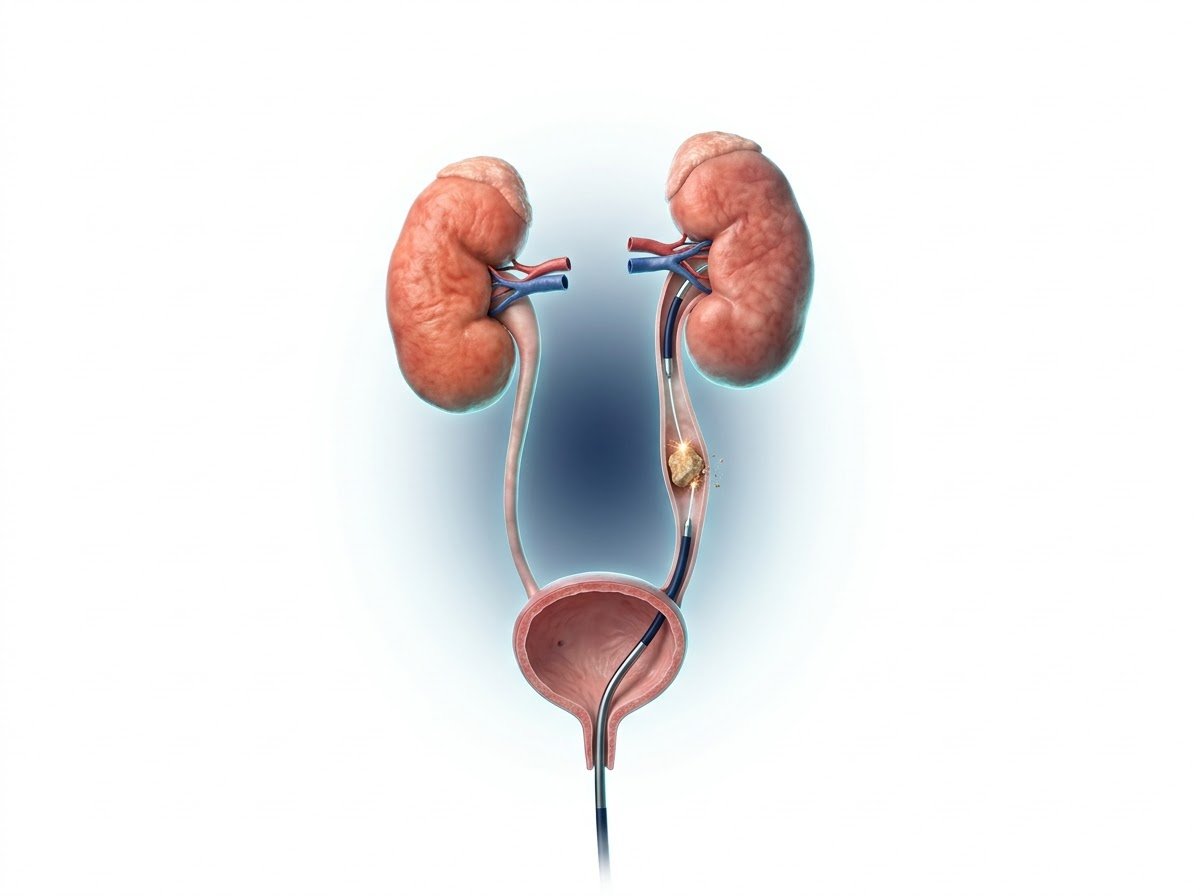
Laser URSL surgery in Faridabad is an example of a minimally invasive surgery performed to remove stones present in the ureter, which is the duct between the kidney and the urinary bladder. Laser surgery to fragment the ureteric stones is performed at the ILSS Ashwani Hospital using endoscopic and laser surgery.
What Is Laser URSL Surgery?
The term "Laser URSL" stands for Laser Ureteroscopic Lithotripsy. This is a minimally invasive procedure that helps to break the stones present in the ureter, the tube responsible for transporting urine from the kidney to the urinary bladder.
In this procedure, a thin ureteroscope is inserted into the urethra and the bladder to identify the stone. Once identified, the stone is fragmented by using laser energy. On the basis of the stone type and clinical situation, fragmentation can be either removed by specialized instruments or left to come out in urine.
When Is Laser URSL Recommended?
URSL using lasers may be suggested by a urologist as an option to actively treat the patient with a ureteric stone.
The treatment may be used in the case if a stone:
Causes pain continuously
Intense or recurrent pain that is not responding to prescribed treatment.
Obstructs the flow of urine
Urinary obstruction.
Has not passed on its own
A stone present in the ureter that has not moved out.
Causes complications with urination
Hematuria or other symptoms associated with urination.
Is too large for natural passage
LA largest stone that has a high probability of not passing
Remains after treatment attempt
Residual stone that needs further removal.
How Is Laser URSL Performed?
The procedure of Laser URSL is usually done under anaesthesia according to the characteristics of the stone and the patient’s health status.
Preliminary Tests
Your physician may ask you to do imaging, urine and blood analysis and anaesthetic assessment to find the stone’s position and to assess your suitability for surgery.
Insertion of a Ureteroscope
This procedure involves inserting a ureteroscope via the urethra and bladder into the ureter and locating the stone without an external incision.
Fragmentation of the Stone with a Laser
The stone is fragmented by laser radiation through a ureteroscope.
Removal of the Stone Fragments
The stone fragments are removed either by a special basket or left for natural passage via urine.
Stenting if Necessary
If needed, the ureteric stent is inserted to drain urine. Your urologist will explain when the stent needs to be implanted and when it should be removed.
Benefits of Laser URSL Surgery
Laser URSL may offer several benefits for appropriately selected patients:
No external incision
The procedure is performed through the natural urinary passage.
Direct access to ureteric stones
The ureteroscope allows the surgeon to locate the stone.
Laser precision
Laser energy breaks the stone into smaller fragments.
Minimally invasive treatment
It avoids open surgical access to the ureter.
Potentially quicker recovery
Recovery may be shorter than after open surgery.
Treatment for persistent stones
It can help manage suitable stones that do not pass naturally.
Laser URSL vs RIRS: What Is the Difference?
Laser URSL and RIRS both use endoscopic techniques and may involve laser energy, but they primarily target stones in different parts of the urinary tract.
Laser URSL
- Primarily treats stones located in the ureter.
- Uses a ureteroscope passed through the natural urinary passage.
- Uses laser energy to fragment the stone.
- May be recommended for stones causing ureteric obstruction or persistent symptoms.
RIRS Surgery
- Treats selected stones located inside the kidney.
- Uses a flexible ureteroscope to reach the kidney.
- Uses laser energy to fragment or dust stones.
- May be suitable for stones in different parts of the kidney.
Laser URSL Treatment at ILSS Ashwani Hospital
Advanced Technology and Specialised Urology Care
ILSS Ashwani Hospital provides evaluation and treatment for kidney and ureteric stones using modern endoscopic techniques and specialised urological equipment.
Laser URSL Surgery Cost in Faridabad
What Affects the Cost of Laser URSL?
The cost of laser URSL surgery in Faridabad varies according to the patient's diagnosis and treatment requirements.
Factors that may affect the total cost include:
Size, number and location of stones
Complexity of the procedure
Preoperative imaging and diagnostic tests
Anaesthesia and operating theatre requirements
Hospitalisation and medication
Ureteric stent placement or removal
Follow-up consultations and investigations
Additional treatment, if required
Recovery After Laser URSL
Recovery after laser URSL depends on the stone's characteristics, the procedure performed and the patient's overall health.
Some patients may experience temporary burning during urination, increased urinary frequency, mild blood in the urine or discomfort in the side, particularly if a ureteric stent has been placed.
Your urologist may recommend:
Frequently Asked Questions
Laser URSL is a minimally invasive surgical method that involves using a ureteroscope and laser beams to fragment stones present in the ureter. The surgery is conducted through the natural urinary tract, without making any cuts outside.