
PCNL Surgery in Faridabad
PCNL surgery in Faridabad involves a minimal-invasive process performed for the purpose of removal of stones from the kidney. At the ILSS Ashwani Hospital, expert urologists perform kidney stone assessment and surgery according to modern methods and equipment. The procedure recommended by the doctors depends on the factors mentioned above.
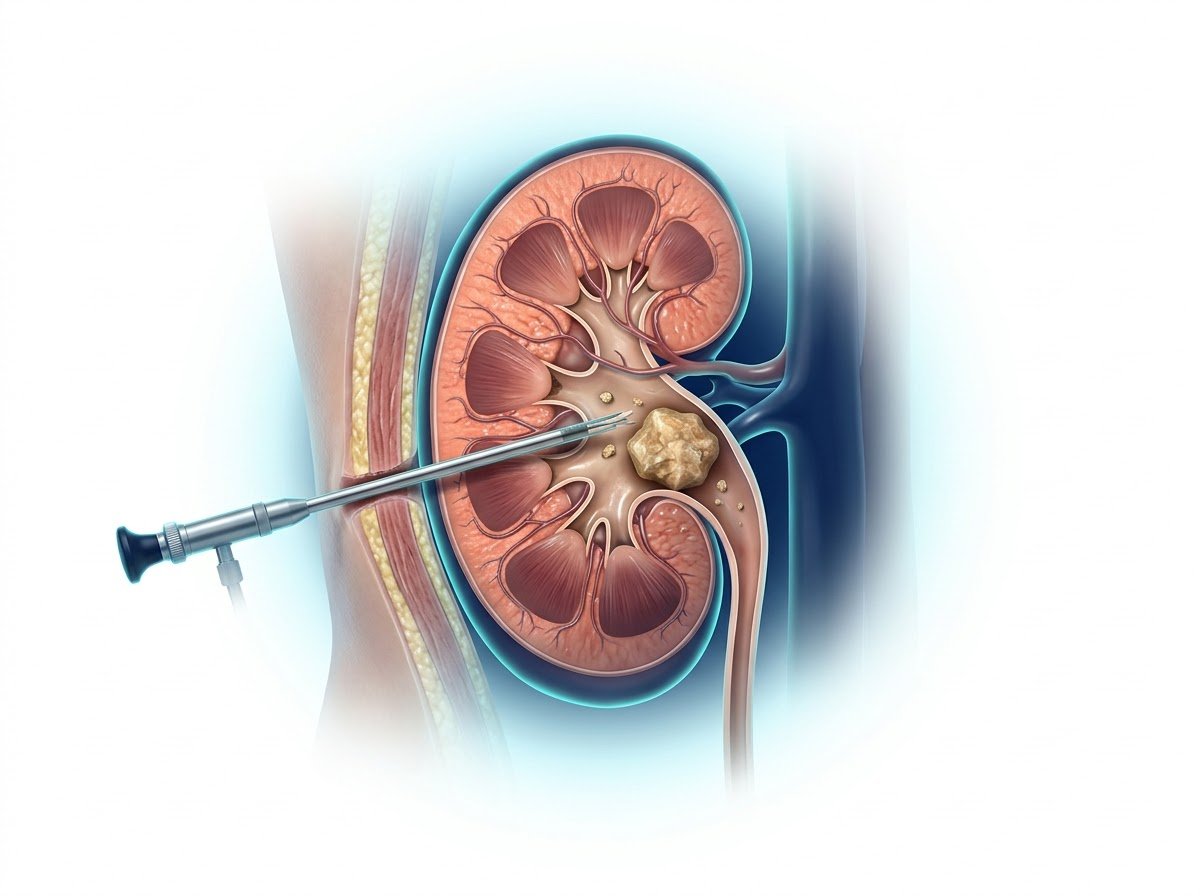
What Is PCNL Surgery?
PCNL refers to Percutaneous Nephrolithotomy. This is a minimally invasive surgery used to remove kidney stones through a small puncture in the body, mainly in the back part of the body.
In this process, the physician makes an incision in the kidney where he/she will use special tools to break down and remove the stone fragments. PCNL is often advised for large, complex or multiple stones that cannot be treated using other methods.
PCNL differs from open surgery in that it uses a small incision during the operation. This is normally done while the patient is under general anesthesia.
When Is PCNL Recommended?
PCNL may be suggested by your urologist as a choice to remove kidney stones, since other techniques might fail to clear the stones successfully.
Especially if the size exceeds 20 mm.
Multiple stones can be removed via this procedure.
If the stone is branching or a staghorn stone.
If RIRS or other procedures are not indicated in such cases.
Remaining or residual stones can be dealt with.
Obstruction or any other complication is associated with this situation.
Your urologist will decide after evaluating various factors including imaging and health history.
How Is PCNL Surgery Performed?
The PCNL procedure takes place in an operating theater in the hospital under suitable anesthesia. There are different procedures based on the patient's condition and the characteristics of the stone.
1. Pre-Operative Examination
Your doctor may suggest a CT scan or some other form of imaging, blood tests, urine tests, and an evaluation for anesthesia to check the stone and see whether there is any infection in your body.
2. Anesthesia
PCNL usually involves the use of general anesthesia so that you can sleep comfortably during the process.
3. Access to the Kidney
The surgeon creates a small cut in your skin and gains access to the kidney through that access track under imaging.
4. Stone Fragmentation and Extraction
Specialized tools will be used in order to locate the stone and remove the stone fragments by breaking the stone into smaller fragments.
5. Post-Operative Observation
Observation for pain, urine output, bleeding and healing takes place after surgery. In certain cases, the drainage tube or ureteral stent may be inserted temporarily.
Mini-PCNL: A Smaller-Tract Alternative
Mini-PCNL is one of the different types of PCNL that utilizes a smaller channel into the kidney.
This type can be applied in some particular kidney stones due to their specific size and location. There is also a possibility of a decrease in the amount of blood loss or pain after surgery because of a smaller channel, but not for all patients.
Selection of the treatment procedure depends on its benefits and disadvantages as well as stone removal efficiency.
PCNL vs RIRS: What Is the Difference?
PCNL and RIRS are two surgical techniques to manage kidney stones which have a different approach to accessing the kidney.
PCNL Surgery
RIRS Surgery
Both procedures do not suit everyone. The doctor will assess factors such as stone size, location, complications and general health before recommending the treatment.
Advanced Kidney Stone Care at ILSS Hospital
ILSS Ashwani Hospital provides specialised evaluation and treatment for kidney stones using several surgical approaches, including PCNL, Mini-PCNL, RIRS, URS and ECIRS.
The hospital is equipped with a 150-Watt Holmium Laser by Jena Surgical, along with flexible ureteroscopy equipment and advanced endoscopic systems to support selected urological procedures.
Our urology team assesses each patient individually to determine the appropriate procedure based on stone characteristics, medical history and clinical requirements.
Why Choose ILSS for PCNL Surgery?
- Dedicated Urology TeamSpecialist evaluation and treatment for kidney stones, prostate conditions and other urological concerns.
- Multiple Treatment OptionsAccess to PCNL, Mini-PCNL, RIRS, URS and ECIRS, depending on clinical suitability.
- Advanced TechnologyModern endoscopic equipment and laser technology support a range of specialised urological procedures.
- Personalised Treatment PlanningRecommendations are based on stone size, location, complexity, kidney anatomy and the patient's overall health.
- Comprehensive Hospital CareDiagnostic evaluation, surgical treatment, postoperative monitoring and follow-up can be coordinated through the hospital.
- Recovery and Follow-Up SupportPatients receive guidance on medication, activity, wound care and follow-up investigations according to their treatment plan.
PCNL Surgery Cost in Faridabad
What Determines the Cost of PCNL?
The cost of PCNL surgery in Faridabad varies according to the patient's condition and treatment requirements.
A personalised estimate can be provided after reviewing the diagnosis and proposed treatment plan.
Contact ILSS Ashwani Hospital to discuss consultation charges, available treatment options and the expected cost of PCNL surgery.
Recovery After PCNL Surgery
Recovery after PCNL depends on stone complexity, the surgical technique used and the patient's overall health. Some patients may experience temporary discomfort, blood in the urine or soreness around the access site.
Your medical team will explain how to care for the wound, manage medicines and gradually resume everyday activities.
Can Kidney Stones Return After PCNL?
PCNL removes existing kidney stones, but it does not eliminate every factor that contributes to stone formation. New stones may develop after successful treatment.
Your urologist may recommend stone analysis, blood or urine tests, adequate fluid intake and dietary changes based on the type of stone and your medical history.
Follow-up appointments can help assess stone clearance and identify ways to reduce the risk of recurrence.
Frequently Asked Questions